

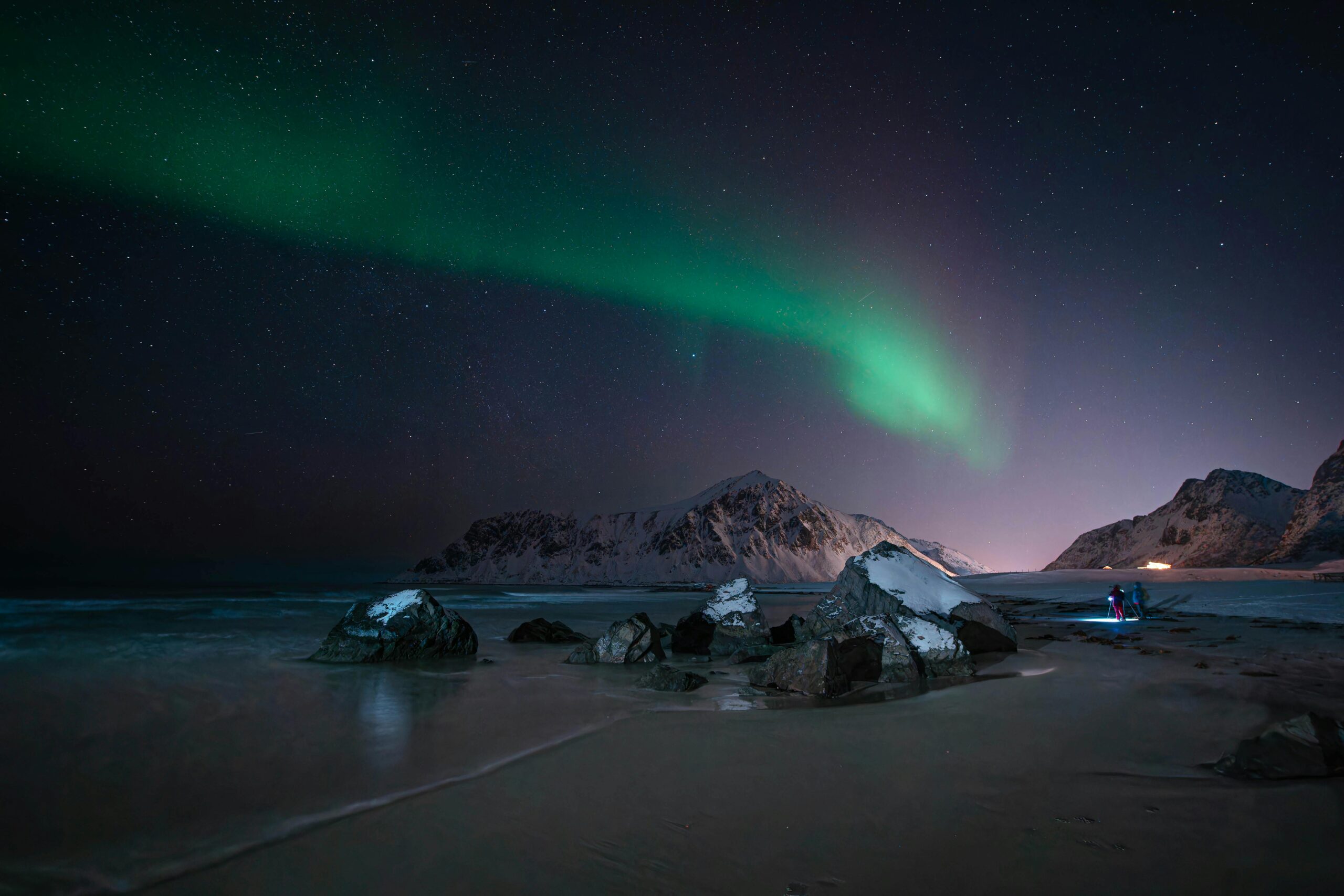
Northern Lights 2026 sits right at the end of the strongest solar cycle we’ll experience for more than a decade. After this, Northern Lights activity will slowly weaken, making bright, frequent displays far less common until the mid-2030s.
If seeing intense, sky-filling auroras is on your bucket list, 2026 is a now-or-never window.
What Makes Northern Lights 2026 So Special?
The Northern Lights (aurora borealis) are powered by the Sun. Their strength rises and falls in an 11-year solar cycle.
Right now, we’re at the peak phase of Solar Cycle 25. That peak doesn’t last long.
Here’s the key point:
- 2024–2026 = strongest solar activity
- After 2026 = steady decline for years
Once solar activity drops, auroras:
- Appear less often
- Stay closer to the poles
- Look dimmer and shorter
The Science (In Simple Words)
When the Sun releases powerful bursts of energy (solar flares and coronal mass ejections), they collide with Earth’s magnetic field.
During a solar maximum:
- More solar storms hit Earth
- Auroras become brighter, wider, and more colorful
- Lights appear in places that rarely see them
By late 2026, this window starts closing.
Why 2026 Is the “Sweet Spot”
✅ Strong solar storms still active
✅ More predictable aurora forecasts
✅ Wider visibility zones (not just the Arctic Circle)
After 2026:
- Solar storms weaken
- Forecast accuracy drops
- You’ll need perfect conditions to see even faint auroras
Best Places to See the Northern Lights in 2026
These destinations benefit the most during peak solar years:
- Alaska – High latitude + low light pollution
- Iceland – Easy access and dramatic skies
- Tromsø – One of the most reliable aurora cities
- Finland – Long dark nights, stable weather
- Canada – Especially Yukon and Northern Manitoba
During weaker cycles, many of these spots see far fewer displays.
Northern Lights 2026: Pros & Cons
| Pros | Cons |
|---|---|
| Bright, frequent auroras | High travel demand |
| Visible in wider regions | Prices may rise |
| Better photo opportunities | Weather still matters |
| Strong reds, purples, greens | Short peak window |
Real-World Example
During the last solar maximum (2013–2014), travelers reported:
- Auroras visible multiple nights in a row
- Strong displays reaching southern Canada and northern Europe
- Long-lasting curtains instead of quick flashes
After that peak? Sightings dropped sharply for years.
2026 mirrors that same pattern.
FAQs (People Also Ask)
Will I still see Northern Lights after 2026?
Yes, but they’ll be weaker and less frequent. You may need several trips instead of one.
Is 2025 or 2026 better?
Both are excellent, but early–mid 2026 offers more stability as forecasts improve with experience from the peak years.
Do I need expensive gear to see them?
No. Your eyes are enough. Cameras only help capture colors more vividly.
Can Northern Lights disappear completely?
No. They never vanish—but strong displays only happen near solar maximum.
Final Verdict
Northern Lights 2026 isn’t just another good year—it’s the closing chapter of a rare solar peak.
If you wait:
- You’ll see fewer lights
- You’ll need more luck
- You may wait another 10–11 years for similar conditions
If the aurora is on your bucket list, 2026 is your best and possibly last real chance to see it at its absolute best.