

Some cities are recognizable long before you arrive. It might be a skyline of spires, a stretch of waterfront houses, or a hilltop town set above the sea. Most Beautiful Cities in across Europe to Visit This Year, These certain places stand out not only for their history but for how clearly they define themselves visually.
This list explores five Beautiful cities in Europe that make an immediate impression. Then reward you further as you move beyond the obvious landmarks and see how each city unfolds in its own way.
The Historic Charm of Taormina, Sicily
Taormina sits high above the Ionian Sea, and most visits start along Corso Umberto I, the main pedestrian street that runs between Porta Messina and Porta Catania. It’s busy, but it gives a good sense of the town’s layout.
From there, it’s easy to step into smaller lanes or cut through Piazza IX Aprile. Where the terrace opens out toward Mount Etna. The Teatro Greco is just uphill and worth the walk. It not only for the ruins but for how the coastline stretches out behind the stage.
If staying overnight, the location of your accommodation shapes the experience more than anything else. Properties just outside the main center tend to be quieter and often come with terraces or gardens overlooking the coast.
Villas with exclusive-use pools are a practical option in this part of Sicily. Especially in the hills around Taormina, where larger properties are common. Having a private pool makes a difference during the hotter months, and many of these villas are positioned to take advantage of the ocean views.
Getting down to the water takes a bit more effort. The cable car from Via Pirandello runs down to Mazzarò, and from there it’s a short walk to Isola Bella. The beach itself is relatively small, but it’s the setting that truly stands out.
The Fairytale Spires of Prague, Czech Republic
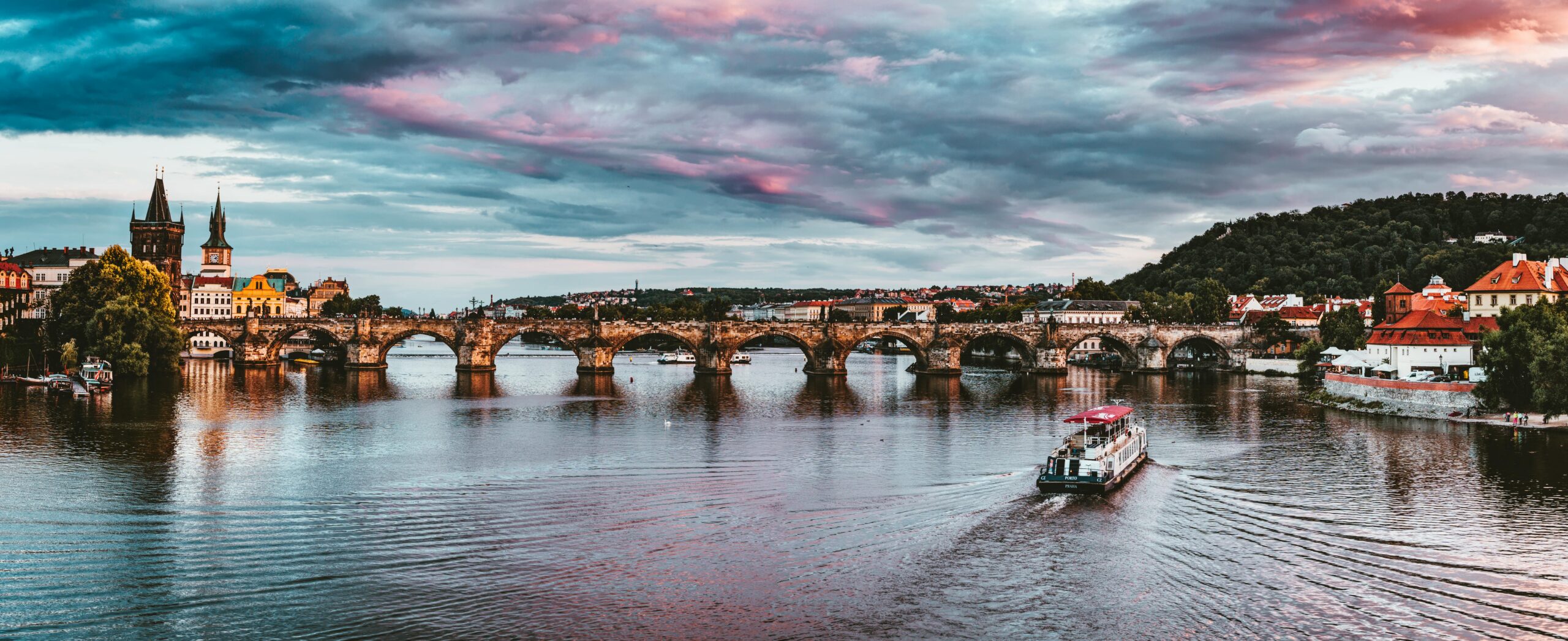
Prague is one of those cities that feels compact once you understand how the districts connect. Most visitors start in Staré Město, where Old Town Square sits between narrow streets lined with older buildings. The Astronomical Clock draws a crowd every hour, but it’s worth stepping a few streets away toward places like Havelská Market. Which runs through a long, narrow lane and gives a more local feel.
You’ll likely cross the Vltava via Charles Bridge, but timing is key. Early morning is noticeably quieter, and from there it makes sense to continue uphill into Malá Strana. The streets become steeper and less crowded as you approach Prague Castle. Moving through the castle complex and down through the gardens toward the river is a scenic way to explore this part of the city.
On the other side, neighborhoods like Vinohrady feel more residential. It’s a short tram ride from the center, and the grid of streets around Náměstí Míru is easier to navigate if you want a break from the busier areas.
The Majestic Peaks of Edinburgh, Scotland
Edinburgh is built around its geography, so getting a sense of the elevation early on helps. The Royal Mile connects Edinburgh Castle at the top to the Palace of Holyroodhouse at the bottom. But it’s the streets branching off that give the city its character. Victoria Street curves down toward Grassmarket, where the open square sits beneath the castle walls. From there, it’s easy to head into the Old Town’s narrower closes or cross over to the New Town via North Bridge.
Arthur’s Seat is visible from much of the city, and walking up from Holyrood Park makes it easier to see how everything is laid out. It’s not a long hike, but the terrain is uneven in places, so it’s best tackled earlier in the day. Back in the center, Princes Street Gardens separates the Old and New Towns, and walking through it gives a break from the denser streets above.
It’s also worth taking time to explore beyond the city. By booking stunning rail holidays in Scotland, you can easily reach the Highlands and coastal regions without the need to rent a car. Routes heading north from Edinburgh pass through changing landscapes, from lowland farmland to more rugged terrain, and they connect well with smaller towns that would be harder to reach otherwise.
The Medieval Canals of Bruges, Belgium
The city of Bruges is often described as compact, and it is, but the layout can still be confusing at first. Starting at Markt Square helps with orientation. From there, walking toward Burg Square leads past the Basilica of the Holy Blood and into quieter streets where the canals begin to appear more frequently. Rozenhoedkaai is one of the most photographed spots, but it’s also a useful point for understanding how the waterways weave through the city.
Moving slightly away from the center changes the pace. The area around Sint-Anna Quarter feels less crowded, with wider streets and fewer tour groups. It’s still within walking distance of the main squares, but the atmosphere is different. Renting a bike is another option, especially if you want to follow the canal paths out toward the edges of the city.
Everything is close enough that you don’t need public transport, but it helps to think in small loops rather than trying to cross back and forth repeatedly. Walking from Markt to Minnewater Park, then circling back along the canals, offers a good overview of Bruges without covering the same ground twice.
The Vibrant Neighborhoods of Madrid, Spain
Madrid doesn’t reveal itself through a single viewpoint or landmark. Instead, the city is shaped by its neighborhoods, each with a distinct pace and atmosphere. Most visits begin around Puerta del Sol or Plaza Mayor, where the streets are busiest and everything feels within reach. From there, it’s easy to branch out into areas like Malasaña or La Latina, where the layout becomes less formal and the rhythm of daily life is more noticeable.
Where you choose to stay plays a central role in how the city unfolds. Central districts offer convenience and quick access to major sights, while areas slightly further out tend to feel more local and less crowded.
To find the best places to stay in Madrid, exploring different options ahead of time can help you settle into a neighborhood that matches your pace and priorities.
Getting around Madrid is straightforward once you’re familiar with the layout. The metro system connects most neighborhoods efficiently, but walking often gives a better sense of how the city fits together. Parks like El Retiro provide a break from the denser streets. While areas such as Chamberí or Salamanca offer a quieter contrast to the center. Madrid rewards a slower approach, where the experience builds gradually as you move between its different districts.
Which beautiful city will you visit first?
Each of these cities stands out in its own way, but all five make an impression right away. Taormina sits above the sea. Prague’s skyline is shaped by its towers and bridges, and Edinburgh rises around its castle and hills. Bruges is built around canals, while Madrid is known for its vibrant culture.
Choosing between these cities often comes down to what draws your attention first. Some places are shaped by their setting, others by their architecture or layout. What they share is a clear identity that makes them memorable beyond a short visit. Whether it’s your first time in Europe or part of a longer trip. These are the kinds of Beautiful cities in Europe that tend to stay with you long after you’ve left.